
POWER Systems – why is it important and who does it serve?
Disability Inclusive Early Warning System – where no one is left behind
At the Fiji Disabled People’s Federation (FDPF) we will always advocate for inclusive early warning and resilience systems, says Jay Nasilasila FDPF’s Programme Coordinator for Inclusive Climate Action and Disaster Risk Reduction.
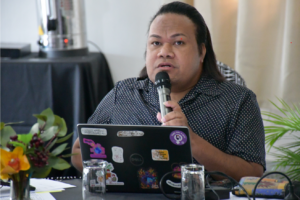
“One that reaches all, whereby it is easily accessed by all, by all meaning the communities, the most affected or vulnerable people,” said Jay.
Jay says they also continue to advocate for important stakeholders such as governments and services who work around the areas of humanitarian response and disasters to understand the various forms of receiving information for persons living with disabilities.
“Once this is clear then this will inform the design of early warning systems to be inclusive.”
“There has been some progress in Fiji for example ensuring that information is delivered to different parts of Fiji in terms of information being simplified and contextualized to the level of understanding for the communities,” Jay said.
POWER systems complementing the existing work of our partners
The Pacific Owned Women-Led Early Warning and Resilient Systems (POWER Systems) complements the work of FDPF through systems such as the Disability Emergency Operating Centre (DEOC).
Jay stresses, the Disability Emergency Operation Centre would complement and strengthen the POWER systems work they are to implement within Shifting the Power Coalition (StPC).
“Strengthening in areas of having phone trees, also updating and strengthening our communications and data within our different DRR focal points within our 19 branches,” Jay added.
POWER systems address the greater risks women face, before, during and after disasters due to existing gender inequalities which include the burden of informal or unpaid care work, limited financial empowerment and independence, increase in GBV related cases experienced during crises and women’s unequal access to technology and communications services.
As a Coalition, we’re very intentional about what ‘inclusiveness’ means for all the women and young women in their diversities which the Coalition serves. Ensuring that early warning and resilience systems are led-by women and for women, who are on the frontline, who are first responders, and who know best how their contexts operate.
For FDPF they understand the various modes of communication and how to disseminate it in various forms to ensure it reaches the last mile.
“One thing is for them to receive the information and also information that would allow them to know that this is really serious and allow them to take action.” Jay said.
For us at FDPF we ensure that we’re bridging that gap at the community level where their level of understanding is met with the information being provided and this is also an area that we continue to advocate for, Jay added.
Nelly Caleb, the National Coordinator for the Vanuatu Disability, Advocacy and Promotion Association (VDPA) said looking at the lens of disability is really about looking at it from a human rights perspective.
“People with disabilities are being discriminated against in different ways. I was thinking of our women with disabilities and other women as well, these women in the rural areas don’t know their rights, sometimes they face abuse or maybe rape, but they don’t know they can get justice for that,” she said.
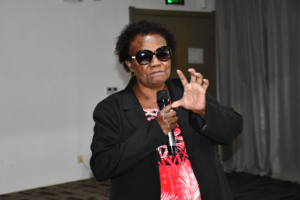
“With the experiences of these diverse women going into evacuation centers in times of disaster most of them are abused by their family members and even others as well in the evacuation centers but women do not talk about it.”
“Most of them don’t know that they have the same rights or the rights to report any such things that happen in the evacuation centers.”
Why context matters:
When speaking to contexts and realities Barbara Tanne, from the Bougainville Women’s Federation knows all too well the importance of community mobilization.
“When we’re doing the community mobilization work, we’re identifying things we’re going to use that we already have,” Barbara said.
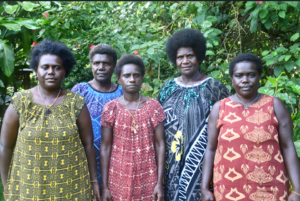
“Early Warning Systems is something that we have always hoped for particularly when we don’t have a system of telephones or sending messages through Digicel.”
Meri Gat Pawa, Meri Gat Infomesen (MGI) is a women-led Multi-Hazard Early Warning system (MHEWS) set up in the Autonomous Region of Bougainville by BWF. It has successfully facilitated access to gender-responsive and inclusive MHEWS during the early years of the COVID-19 pandemic, disseminating 10-million messages and reaching approximately 3 million people across Papua New Guinea.
She said for them in the Autonomous Region of Bougainville, an existing form of early warning mechanism is through radio.
“We could already be using early warning signs in the radio activities that have and we just send the alerts through our phones to respondents or community mobilizers at the community level.”
“This mainly has actually given us the strength to start working in a holistic approach, we don’t just talk about it but action it.”
This is why the work of the Coalition through mechanisms such as POWER systems matter, and setting up multi-hazard early warning and resilience systems that are context specific grounded through community mobilization, inclusive forms of early warning systems which is backed by existing forms indigenous and traditional systems.
Jay also reiterates the value of intentionally supporting the communities who are most impacted to do the work themselves.
“They would understand their context best, and they are the ones who would be best to lead their particular work.”
“I also acknowledge the importance of us being aware in terms of our existing traditional structures, knowledge while we have science it is also important for us to keep our traditional knowledge intact so that we’re able to balance the two in terms of our work around disaster preparedness, response and recovery.” Jay added.


