
Nothing about us without us is not a slogan its a survival strategy
A warning that does not reach all of us is not a warning.
These powerful sentiments were shared by Ulamila Biudole, the Disaster Risk Reduction Project Officer for the Fiji Disabled People’s Federation (FDPF).
“Let me repeat that, a warning that does not reach all of us is not a warning,” she added.
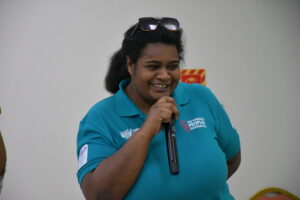
“Too often young women with disabilities or persons with disabilities are treated as invisible when it comes to crisis in terms of communication. We have shown that information can be shared in ways that everyone can understand or act on.”
Ulamila stresses that she has learned from other Pacific young women living with disabilities in climate-risk prone countries that disaster preparedness only works when it is shaped by their lived experiences.
“Not by assumptions, but when it’s shaped by us. These lessons have re-shaped what I understand by risks, safety and what true preparedness looks like. And I believe these lessons are essential for saving lives,” she said.
Inclusive and accessible early-warning systems is vital for young women living with disabilities
“A message that only some of us can access is not a message,” she added.
Ulamila also reiterates that accessibility cannot be added in the end, it must be built in from the beginning. “Safety starts with being seen and understood, I believe accessibility is not a favor it’s a right.”
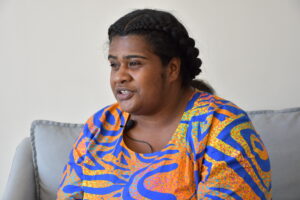
“Evacuation plans must be shaped by those who rely on them, young women with disabilities have shown me that evacuation plans and their routes look good on paper, but they can easily collapse when it comes to disaster.”
“What seems simple in theory can become impossible in practice.” she added.
Safety in practice is essential for survival
For Pacific young women with disabilities, they need safety that works in practice, and this is something that Ulamila tirelessly advocates for.
“We want safety where we can define what safety truly means to us, not theoretical safety, not assumed safety,” Ulamila adds.
“At the heart of the disability inclusive disaster risk reduction is this one principle; nothing about us without us, this is not a slogan it’s a survival strategy and when young women with disabilities lead, our systems become sharper, safer and more humane.”
“And when we design for those most at risk, we end up protecting everyone because these issues we are not only facing within the pacific it’s a global one as well. I know across the continents young women with disabilities are facing the same exclusion.”


